How to Reduce Hallway Traffic Without Creating More Work for Teachers
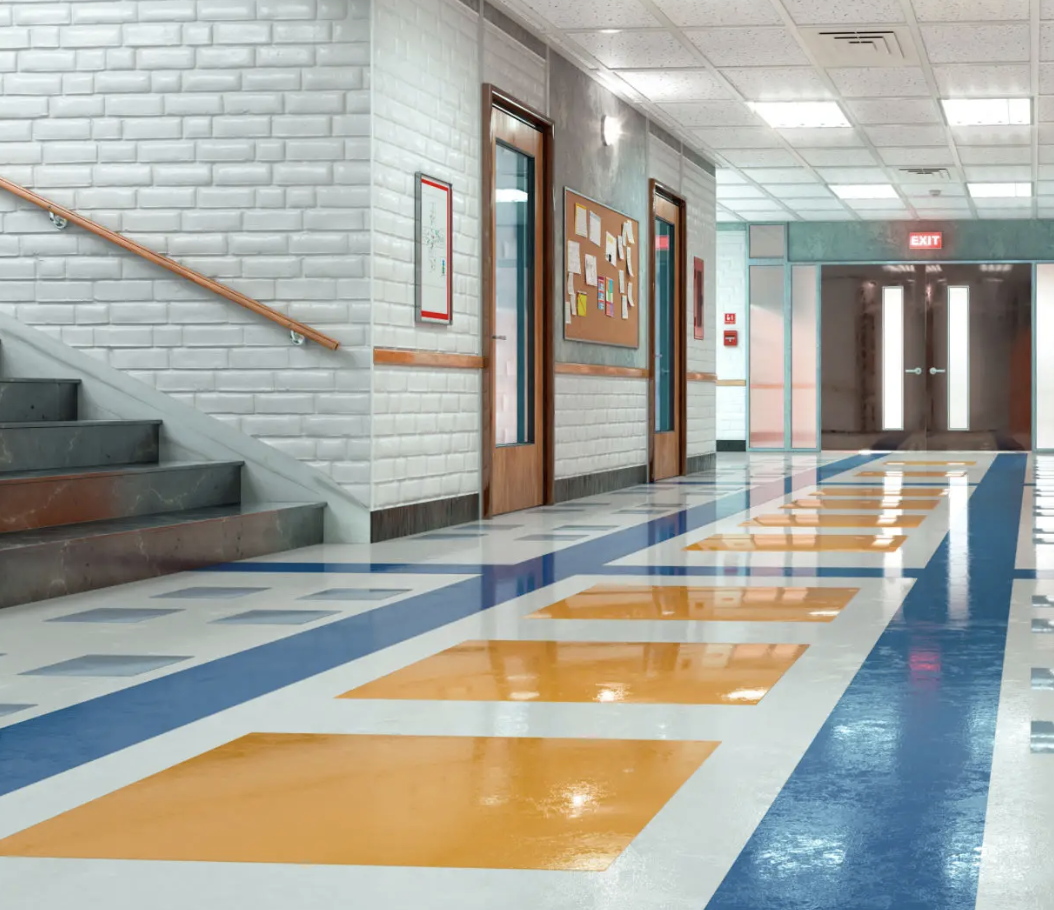
Hallway traffic is one of those school problems that seems small until it isn't.
A few students leaving class here and there may not seem significant. But throughout an entire school day, frequent trips to the restroom, water fountain, nurse, office, or another classroom can quickly add up.
The challenge for schools isn't necessarily stopping students from leaving class. Students have legitimate reasons to move throughout the building.
The real challenge is creating better visibility and accountability without asking teachers to take on another administrative task.
The Problem With Traditional Hall Passes
For decades, schools have relied on paper passes, planners, laminated cards, sign-out sheets, and other simple methods for managing student movement.
They're easy to understand, but they provide very little information.
A paper pass can tell someone that a student has permission to be in the hallway. It usually can't tell administrators:
- How long the student has been out of class
- How frequently that student leaves class
- Which destinations receive the most traffic
- What times of day have the most hallway activity
- Whether certain students are repeatedly leaving class at the same time
- Whether a pattern is beginning to develop
- Without that information, hallway management becomes largely reactive.
Start With Visibility, Not Restrictions
One of the easiest mistakes schools can make is responding to hallway problems by simply creating more rules.
Sometimes additional restrictions are necessary. But before changing policies, schools should understand what is actually happening.
For example, administrators may discover that hallway traffic spikes during a particular period. A small number of students may account for a disproportionate number of passes. Certain destinations may also be responsible for significantly more traffic than others.
Once those patterns are visible, schools can respond to the actual problem rather than creating broad restrictions for every student.
Make Hall Passes Easy for Teachers
Any hallway management system is only useful if teachers actually use it.
Teachers already have enough competing for their attention during a class period. A hall pass shouldn't require navigating several screens, filling out forms, or interrupting instruction every time a student needs to leave.
The process should be simple:
- A student requests a pass.
- The teacher approves it.
- The student leaves.
- The system handles the tracking.
That simplicity is important. Technology should remove administrative work from the classroom rather than create more of it.
Look for Patterns Over Time
This is where digital hall passes can provide schools with something a traditional paper pass simply can't: data. Individual passes don't always tell you much. Patterns do.
A student leaving class once for ten minutes probably isn't noteworthy. A student leaving the same class every day for fifteen or twenty minutes might be.
Likewise, several students repeatedly requesting passes to the same location during the same period may indicate something administrators should investigate.
Digital hall pass data allows schools to identify these patterns earlier and make informed decisions about how to address them.
Accountability Doesn't Have to Feel Punitive
Better hallway management shouldn't mean treating every student as though they're doing something wrong. Most students use hall passes appropriately.
The goal is simply to create reasonable accountability around student movement while giving staff the information they need when a problem does occur.
When students know that passes have a destination and a timer, expectations are also clearer. Everyone understands where the student is supposed to be and approximately how long the trip should take.
That creates accountability without requiring constant intervention from teachers or administrators.
A Better Approach to Student Movement
Schools don't need to eliminate hallway traffic. They need a better way to understand it.
With the right system, administrators can see what's happening throughout the building, teachers can approve passes without disrupting instruction, and schools can identify potential problems before they become larger issues.
That's exactly why we built DotPass.
DotPass is a simple and affordable digital hall pass platform designed specifically for K–12 schools. Schools can monitor active passes in real time, set time limits, identify usage patterns, manage student restrictions, and gain better visibility into student movement - all without adding unnecessary work for teachers.
The result isn't just a better hall pass. It's a clearer picture of what's happening throughout your school.
Interested in seeing how DotPass works?
Schedule a quick demo and see how your school can modernize hallway management without making things more complicated.